According to iGaming Business, the following account is based on its reporting; these assertions are attributed to that source.
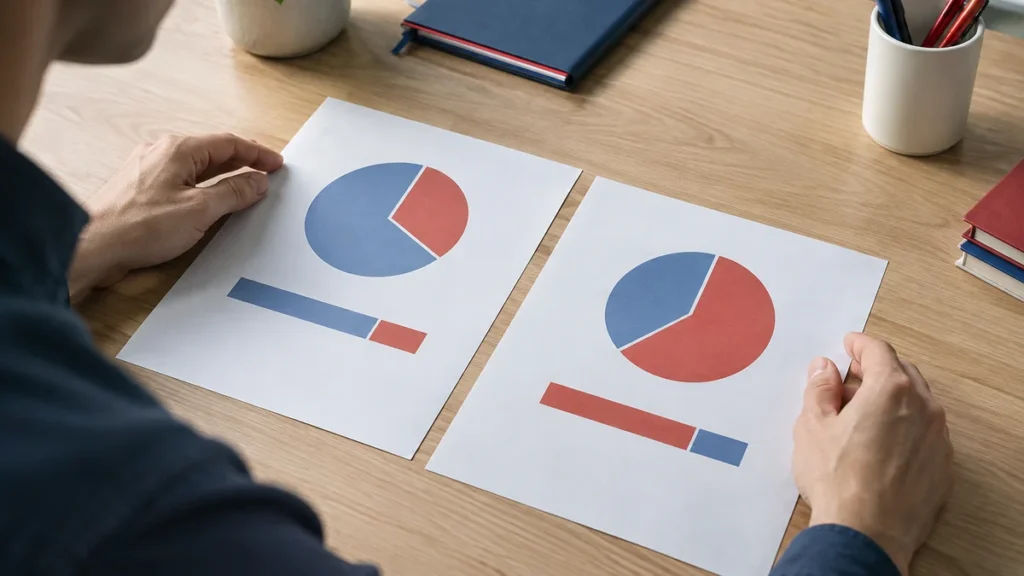
iGaming Business reported that the Kansspelautoriteit (Ksa) estimated licensed operators accounted for around 59% of total gross gaming yield in the Dutch gambling market in 2025. The outlet said the estimate was up from 54% in 2024. These figures describe a reported estimate of revenue share; they are not an independently verified outcome, and the available reporting does not establish why the share changed.
What the estimate says about the licensed market
The central point is the denominator: the 59% refers to total estimated Dutch gambling-market gross gaming yield, not to the number of people who gambled or the proportion of gambling activity conducted through licensed providers. It is therefore a revenue-share measure. A reader can use it to understand how much of the market’s reported yield was attributed to licensed operators, but not to infer how many customers those operators had.
In its account of the Ksa estimate, iGaming Business also gave a 2024 comparison of 54%. The arithmetic difference between 54% and 59% is five percentage points. That is a comparison between the two reported shares, not evidence by itself of what caused the change or whether the underlying market became larger or smaller. A share can change because its numerator, its denominator, or both change; the reported figures alone do not show which, if any, of those possibilities applied.
The complementary 41% is simply the portion of the estimated total that is not represented by the stated 59% share for licensed operators. That arithmetic does not establish what activities or providers make up the remainder, nor does it provide a breakdown of that portion. Treating the complement as a detailed description of the market would go beyond the information in the report.
Revenue share is not player reach
Channelisation can be discussed in more than one way. This particular estimate addresses the channel through which gambling-market revenue was attributed: licensed operators’ share of gross gaming yield. A separate measure could concern people, accounts, visits, or other forms of participation, but the 59% figure does not supply those measures. A revenue share should not be rewritten as “59% of players” or “59% of gambling customers.”
The distinction matters because a market-wide percentage compresses activity into one figure. It does not show how revenue is distributed among individual operators, how many people used any given service, or whether the same customers used more than one channel. None of those details can be read from the reported share. They would require separate information, which is not supplied in the available account.
Likewise, the estimate does not say whether the reported licensed share was evenly distributed across types of gambling or across different groups of customers. It gives an aggregate for the Dutch gambling market as presented in the report. Without a supporting breakdown, interpretations about particular products, operator categories, or customer behaviour should be treated as questions for further evidence, not conclusions from the 59% figure.
How to read the change from 2024 to 2025
The move from 54% to 59% is a five-percentage-point increase in the shares reported by iGaming Business. “Percentage points” is the clearest way to describe the difference between two percentages: subtracting 54 from 59 gives five. Calling it a five per cent increase would describe a different calculation and could blur the size of the reported change.

Even when the difference is stated precisely, it should not be mistaken for an explanation. The figures do not identify the factors behind the change, establish whether the estimate uses an unchanged method in both years, or tell readers how uncertain either estimate may be. The available reporting gives the two figures and their comparison, but it does not provide enough material to answer those methodological questions.
Nor does a higher share automatically mean that the licensed market’s gross gaming yield rose in absolute terms. A share is relative to a total. Without the underlying amounts for both licensed operators and the full market, the percentages cannot establish whether either amount increased, decreased, or stayed the same. The reported comparison supports a statement about share only.
What the estimate does—and does not—show
Read narrowly, the estimate says that licensed operators were assigned around 59% of total Dutch gambling-market gross gaming yield in 2025, according to the Ksa estimate as reported by iGaming Business. It also gives a reported 2024 share of 54%. Those are the useful points the figures directly communicate.
They do not, on their own, establish a trend beyond the comparison presented, explain the causes of the difference, quantify player reach, or describe the composition of the remainder. They also do not verify the estimate independently. Keeping these boundaries visible makes it possible to discuss the figure without turning one aggregate percentage into claims that it cannot support.
For regulators, operators, researchers, and readers, the number can serve as a prompt for more specific questions: what definition of the market was used, how the estimates were produced, what uncertainty applies, and what separate evidence is available about participation? These are questions raised by the limits of an aggregate revenue share, not answers supplied by the reported estimate.
What remains to be confirmed
The available account comes from one secondary source: iGaming Business. It reports the Ksa estimate but does not independently verify the figure. The most useful next step for confirmation is to consult the Ksa’s underlying monitoring report, then compare the figure with later estimates if they become available. Such material could confirm, revise, or provide methodological context for the reported numbers; no future regulatory action is established by the information here.
The distinction between reporting and confirmation is important. Saying “the Ksa estimated” accurately describes the claim as presented by iGaming Business. Saying the figure is an independently confirmed market outcome would overstate what the available source establishes. Until the underlying material is checked, the careful formulation is that the Ksa estimate, as reported, put the licensed share at around 59% in 2025, up from 54% in 2024.
A concise reading of the headline figure
The 59% figure is best understood as a reported estimate of licensed operators’ share of Dutch gambling-market gross gaming yield in 2025. The comparison with 54% in 2024 amounts to five percentage points. Neither percentage is a measure of player share, and neither explains the reasons for the difference. The estimate’s source and limits matter as much as the headline number: iGaming Business reported it, while the underlying Ksa monitoring report and subsequent estimates remain the routes to primary-source confirmation and possible revision.