A report about a confirmed hardware implant is a reason to ask careful questions about how a device was sourced—but it is not evidence that every seller or device is affected. Ledger said an impacted customer device contained an unauthorized hardware implant. Ledger’s confirming statement was released on October 10, 2026. Ledger’s statements are the basis for the incident details below; the available account relies on one source and does not establish a final scope or resolution.
What the report does—and does not—establish
Ledger confirmed that an impacted user’s device contained an unauthorized implant. That establishes a reported case involving at least one customer device. It does not, on the information available, establish how many devices were affected, how the implant was introduced, or whether a particular technical pathway was used. Those unanswered questions should remain unanswered in any summary of the report.
Ledger said all confirmed cases at that point involved devices sold through the reseller CryptoBilis. This is a specific statement about the confirmed cases then known to Ledger. It should not be expanded into a claim that every CryptoBilis device was affected, or that other resellers or devices were affected. The report does not establish either conclusion.
The distinction matters when making a purchasing decision. A named reseller is a relevant point to check against the available report, but a connection to that seller is not a substitute for case-by-case information about a device. Nor does the report provide a comprehensive list of safe sellers, affected serial numbers, or inspection criteria. Do not treat an assumption as a finding.
Check the seller and the purchase record
Before ordering a hardware wallet, identify the exact seller that will take and fulfil the order. If a marketplace lists a product under a familiar brand, check who is actually selling it rather than relying only on the product name or the marketplace itself. Keep the order confirmation, seller details, product description, and any relevant support correspondence. These records can help you describe where a device came from if you need to ask the manufacturer or seller for guidance.
When the seller’s identity or route to purchase is unclear, pause before paying and seek clarification through the manufacturer’s official support channels. Check current official information about authorized sourcing rather than assuming that an old listing, a search result, or another customer’s recommendation is sufficient. This is a cautious purchasing step, not a claim that the available report names any particular authorized seller.
- Record the seller’s name and the channel through which you placed the order.
- Keep the purchase confirmation and any statements made about the device’s origin.
- If the seller or sourcing route is uncertain, ask the manufacturer for current guidance before setting up the device.
- Do not use the CryptoBilis report to infer that an unrelated seller or device has been implicated.
These checks cannot establish that a device is safe, and they do not replace instructions from the manufacturer. Their purpose is to make the source of a purchase clearer and to help you know where to direct questions. If you already have a device and are unsure about its origin, avoid treating a visual check or an online discussion as a definitive assessment.
Handle an unused device cautiously
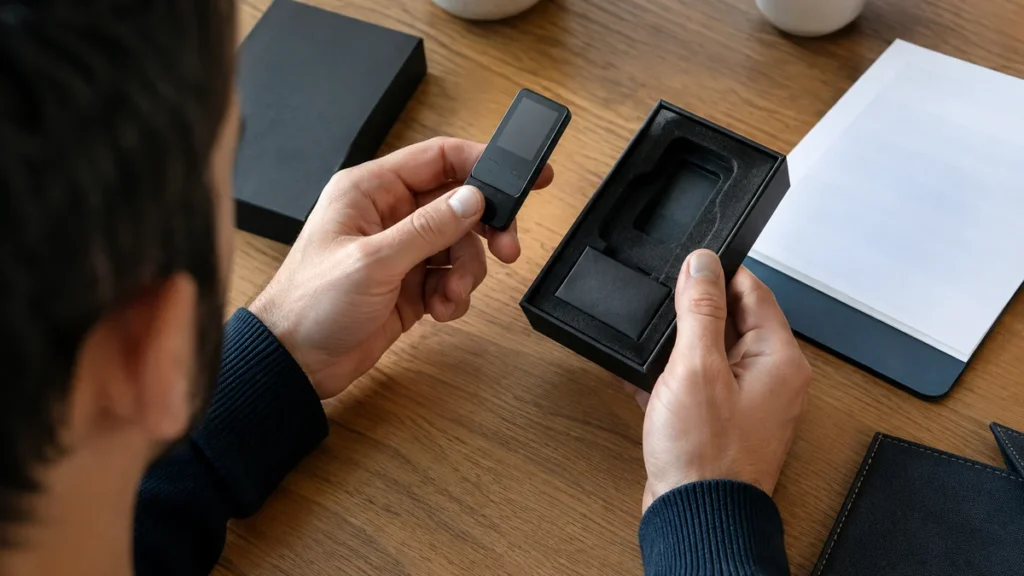
Ledger advised customers not to initialize unused devices. If you have an unused device and are uncertain about its status, follow that advice and consult Ledger’s official support guidance before proceeding. The report does not provide a general inspection procedure, a list of signs that identify an implant, or alternative setup steps. Adding such steps would go beyond what it establishes.
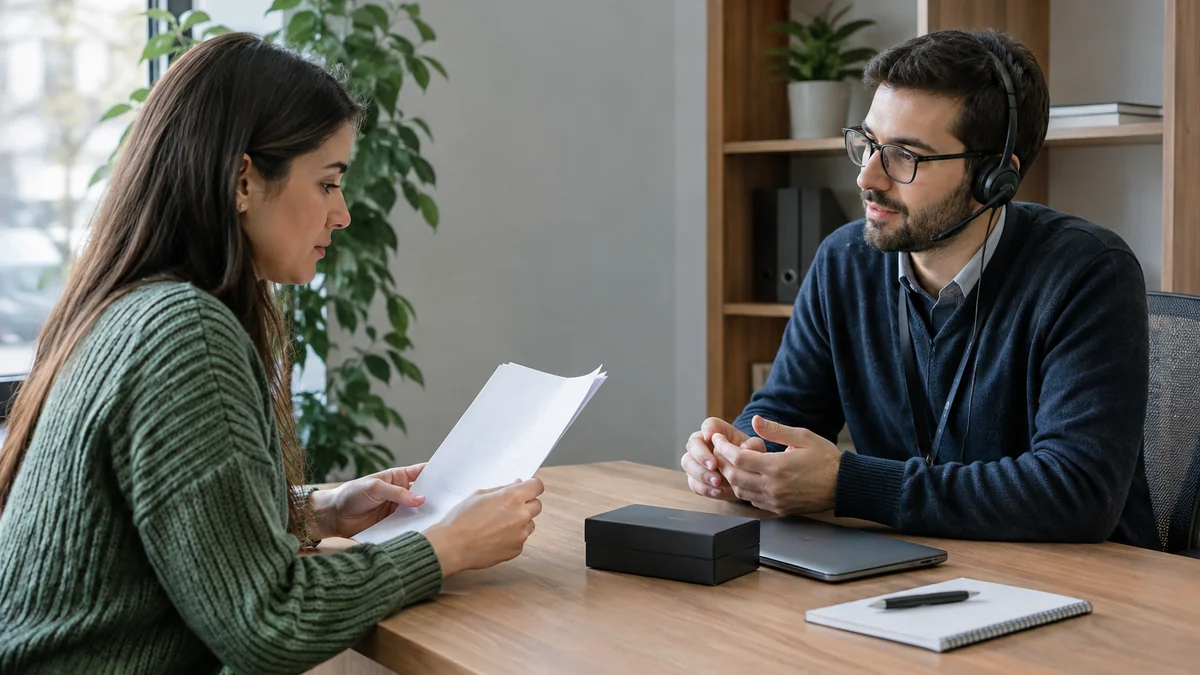
Keep the device and its purchase records available while seeking guidance. Describe the seller and the circumstances of the purchase accurately, and distinguish what you observed from what you suspect. If packaging or the device appears unusual, you can report the observation to official support without claiming that it proves an implant is present. Do not initialize the device merely to see what happens when the manufacturer has advised against doing so for unused devices.
Use official support information reached through a source you can verify, and be cautious about unsolicited messages or anyone asking you to disclose sensitive wallet information. This article cannot authenticate a device or replace Ledger’s guidance. Do not treat a response in a forum, a seller’s reassurance, or a stranger’s proposed test as an official determination.
Separate confirmed details from open questions
For this report, the confirmed points are narrow: Ledger said an impacted customer device contained an unauthorized hardware implant; Ledger said all confirmed cases at that point involved devices sold through CryptoBilis; and Ledger advised customers not to initialize unused devices. Ledger’s investigation was described as ongoing. The available report does not settle the investigation’s final scope or resolution.
That boundary is useful when evaluating updates. A new statement may add information, but readers should check who issued it, when it was issued, and what it actually says. A statement about one confirmed case should not be rewritten as a claim about all devices. A connection to one reseller should not be described as proof about the rest of the market. Until a reliable update provides more detail, the number and wider scope of affected devices remain unestablished here.
A measured response for buyers
For a prospective buyer, the practical response is to make the seller and purchase route clear, retain documentation, and consult current official sourcing and support guidance when anything is uncertain. For an owner of an unused device, Ledger’s reported advice is not to initialize it; contact official support for direction. For anyone discussing the incident, attribute the claims to Ledger and avoid presenting unanswered questions as settled facts.
This approach does not promise that any check can rule out a hardware problem. It keeps the known report in proportion while giving buyers a sensible way to handle uncertainty: verify the source where possible, preserve the facts of the purchase, avoid unsupported tests, and wait for authoritative guidance rather than relying on speculation. Ledger’s investigation was described as ongoing, so readers seeking a final account should look for further official information rather than assume the available report is the last word.