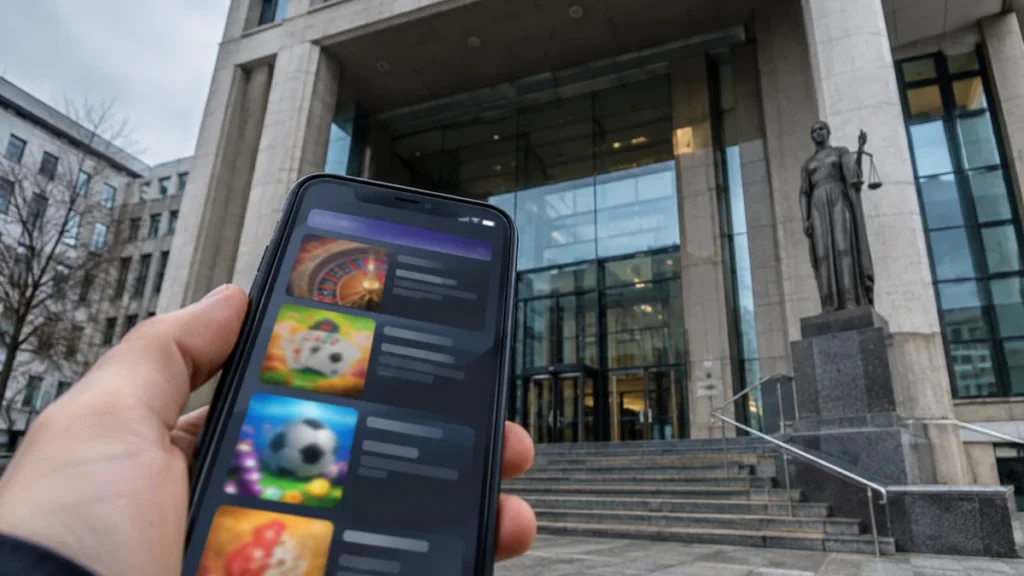
Dutch gambling trade association VNLOK brought Meta Platforms before the Amsterdam court on 28 September 2026 over illegal gambling advertisements on Meta’s platforms. VNLOK is asking the court to find that Meta failed to meet its obligations under the European Union’s Digital Services Act (DSA). That is the association’s allegation; it is not a finding by the court.
The case puts a specific question about platform obligations and illegal gambling advertising before a Dutch court. But the available reporting establishes neither that VNLOK’s claim has been accepted nor that Meta has been ordered to change its platforms. Reporting dated 4 October 2026 described the proceedings as unresolved.
Why VNLOK took Meta to court
VNLOK’s action concerns illegal gambling advertisements appearing on Meta platforms and the responsibilities Meta has under the EU Digital Services Act. The association asked the Amsterdam court to rule that Meta was failing to meet those obligations. The claim is therefore about how the DSA applies in this dispute, rather than an established legal conclusion about Meta’s conduct.
That distinction matters when describing the case. A party asking a court to find that another party has failed to meet an obligation is making an argument for the court to consider. It does not, by itself, show that the alleged failure has been proved. In the reporting available here, the claim is attributed to VNLOK, and no court finding resolving it is reported.
The issue identified in the case is illegal gambling advertising on Meta’s platforms. The supplied reporting does not establish further details about particular advertisements, their reach, the people who saw them, or any specific action Meta did or did not take in response. Those points should not be treated as established features of the proceedings on the information available.
What the Amsterdam court is being asked to consider
At the centre of the dispute is the application of EU platform obligations to illegal gambling advertising. VNLOK wants the court to find that Meta was failing to meet its DSA obligations. The court’s consideration of that request is different from a general explanation of what the DSA requires in every situation: the material provided for this case does not set out the detailed legal tests or the arguments each side may make.
It is also important not to read more into the filing than the reported facts support. The case does not establish, on its own, that all gambling advertisements on Meta platforms are illegal, that Meta has been found responsible for particular advertisements, or that a court has ordered a particular moderation or advertising measure. The stated dispute is narrower: VNLOK is asking for a ruling on Meta’s obligations in relation to illegal gambling ads.
The distinction between an allegation and a ruling helps clarify what the proceedings can and cannot tell readers at this stage. VNLOK’s position is on record in the reported action. The court’s response is not established in the supplied reporting. Until an outcome is reported, it would be inaccurate to present the association’s view as a judicial determination or to describe any requested result as an order already in force.
What is known—and what remains open
The reported timeline is limited but clear. VNLOK summoned Meta before the Amsterdam court on 28 September 2026. A report dated 4 October 2026 said the proceedings remained unresolved. These dates show when the action was brought and the status described by that later reporting; they do not establish that a hearing, judgment, or platform change took place.
The available account does not establish a ruling in VNLOK’s favour or against it. It also does not establish that the court has directed Meta to remove advertisements, alter how its platforms operate, or take any other specific step. No such outcome should be inferred from the fact that VNLOK brought the case.
For the same reason, the case’s possible implications should be described cautiously. It raises a dispute about applying EU platform obligations to illegal gambling advertising, but the supplied information does not show how the Amsterdam court will interpret those obligations or what result it may reach. Any claim about a legal precedent or a wider change to platform practices would go beyond the reported facts.
Case status: proceedings remain unresolved
As described in reporting published on 4 October 2026, VNLOK’s proceedings against Meta remained unresolved. The reporting supplied for this article establishes no court ruling and no ordered changes to Meta’s platforms. The present status should therefore be stated as pending in that reporting, rather than as a completed case.
The central point for readers is the difference between the question before the court and an answer from the court. VNLOK alleges that Meta was failing to meet its DSA obligations in relation to illegal gambling advertising and has asked the Amsterdam court to find accordingly. Whether the court accepts that claim, and whether any order follows, is not established by the available information.
Until a reported decision or other confirmed outcome changes that picture, the careful account remains straightforward: VNLOK brought Meta before the Amsterdam court on 28 September 2026; the association’s claim concerns the EU Digital Services Act and illegal gambling advertisements; and reporting dated 4 October 2026 described the proceedings as unresolved. The allegation remains VNLOK’s, not a court finding.