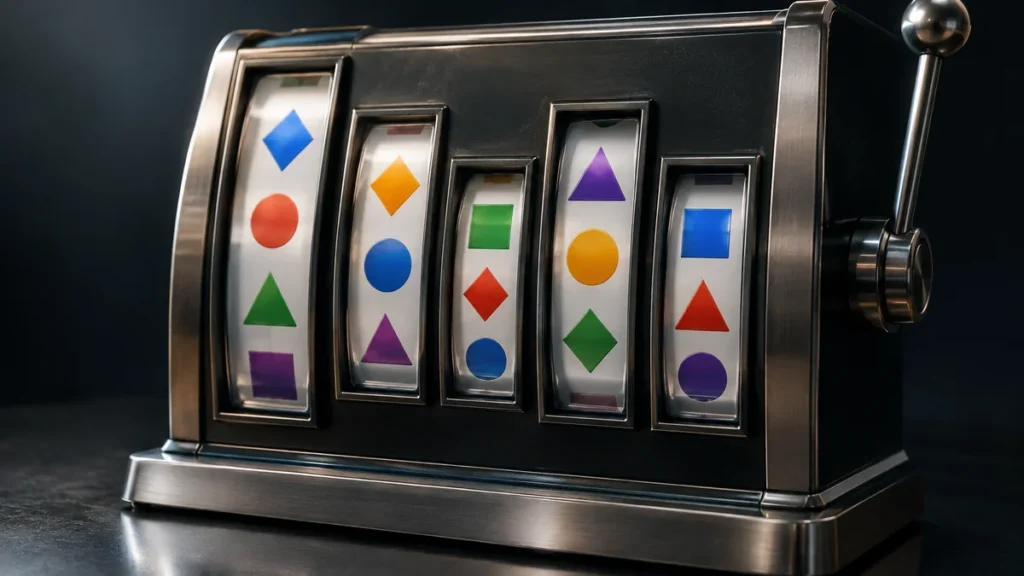
According to Evolution’s official Big Time Gaming profile, the following account is based on its reporting; these assertions are attributed to that source.
Evolution’s official Big Time Gaming profile offers a concise account of the studio’s history and slot mechanics. It says Big Time Gaming (BTG) was founded in 2011 and identifies Bonanza, launched in 2016 with the Megaways mechanic, as a notable point in that history. The profile explains Megaways through changing symbol heights and a maximum of 117,649 ways to win. It is a description of the company and its portfolio, not an announcement of a new development.
That distinction matters when reading the page. Evolution is the source for the statements about BTG’s founding, Bonanza and Megaways. The profile supplies a few specific details, but it does not provide a dated account of a new event or explain how BTG’s RNG content fits into Evolution. Its claims can help readers understand the mechanic Evolution describes; they should not be stretched into conclusions the page does not make.
Big Time Gaming’s founding and Bonanza launch
Evolution’s profile says Big Time Gaming was founded in 2011. It also says Bonanza launched in 2016 with the Megaways mechanic. Those dates give the profile’s account a simple chronology: a founding year, followed by the launch of a named game associated with a named mechanic. The page does not, in the information cited here, add further milestones or dates to that sequence.
For readers looking for a quick answer to when BTG was founded or when Bonanza launched, the profile’s wording is direct: 2011 for the founding and 2016 for Bonanza. Keeping the two details separate avoids a common kind of confusion: the founding date is not the game’s launch date, and the 2016 launch is the point the profile connects with Megaways.
The wording also sets a limit on what can safely be inferred. It establishes that Evolution associates Bonanza’s launch with the Megaways mechanic. It does not, by itself, provide a complete history of BTG, list every title in its portfolio or describe the circumstances of the launch. Those would require additional information beyond this profile.
How Evolution describes the Megaways mechanic
Evolution describes Megaways as a mechanic in which symbol heights change on every spin. In practical terms, that phrase identifies the feature the profile wants readers to notice: the height occupied by symbols is not presented as fixed from one spin to the next. The profile’s explanation focuses on changing symbol heights rather than offering a detailed account of the game’s underlying software or rules.
Evolution says the mechanic can offer up to 117,649 ways to win. “Up to” is an important qualification: 117,649 is the maximum stated in the profile, not a claim that every spin produces that number. The figure describes the stated upper limit of ways to win. It should not be treated as a promise about a particular result, payout or likelihood of winning.

These two details—variable symbol heights and a stated maximum number of ways to win—are the core of the profile’s description. They are related in the sense that Evolution presents them together as an explanation of Megaways, but the page does not provide a calculation or a full technical breakdown connecting the changing heights to the maximum figure. A reader can accurately repeat the profile’s description without assuming more about how the mechanic is implemented.
That careful reading is useful because a large number can easily be mistaken for a prediction. The profile’s wording is about the mechanic’s potential number of ways to win, with a stated ceiling. It does not say that the maximum occurs on every spin, that a win is assured, or that the number alone determines what a player receives. Those are separate questions, and this source does not answer them.
What the profile does—and does not—establish
The page is useful as Evolution’s account of BTG’s history and selected slot-design details. It names the company’s founding year, places Bonanza’s launch in 2016 and summarizes Megaways using two concrete features. These are the points readers can take from the profile with clear attribution to Evolution.
At the same time, the profile is undated in the supplied information. It therefore does not establish when its description was published or identify a newly announced event. The presence of a company profile should not be read as evidence of a recent change, launch or corporate development. No dated follow-up is identified in the source information available here.
The page also does not explain how BTG’s RNG content fits into Evolution. Although the profile concerns Big Time Gaming and describes slot mechanics and a portfolio, that is not enough to establish the details of a relationship between BTG’s RNG content and Evolution. Readers seeking that explanation would need a source that addresses it directly; this profile does not supply one.
In short, Evolution’s profile supports a focused account: BTG was founded in 2011; Bonanza launched in 2016 with Megaways; the mechanic is described as changing symbol heights on every spin; and it can offer up to 117,649 ways to win. It is a useful overview of those points, but not a dated news announcement or a complete technical or corporate account. Keeping that scope in view makes the profile easier to use without turning its concise description into claims it does not make.